Post Construction Window Cleaning · Keene, NH
Post Construction Window Cleaning in Keene, NH
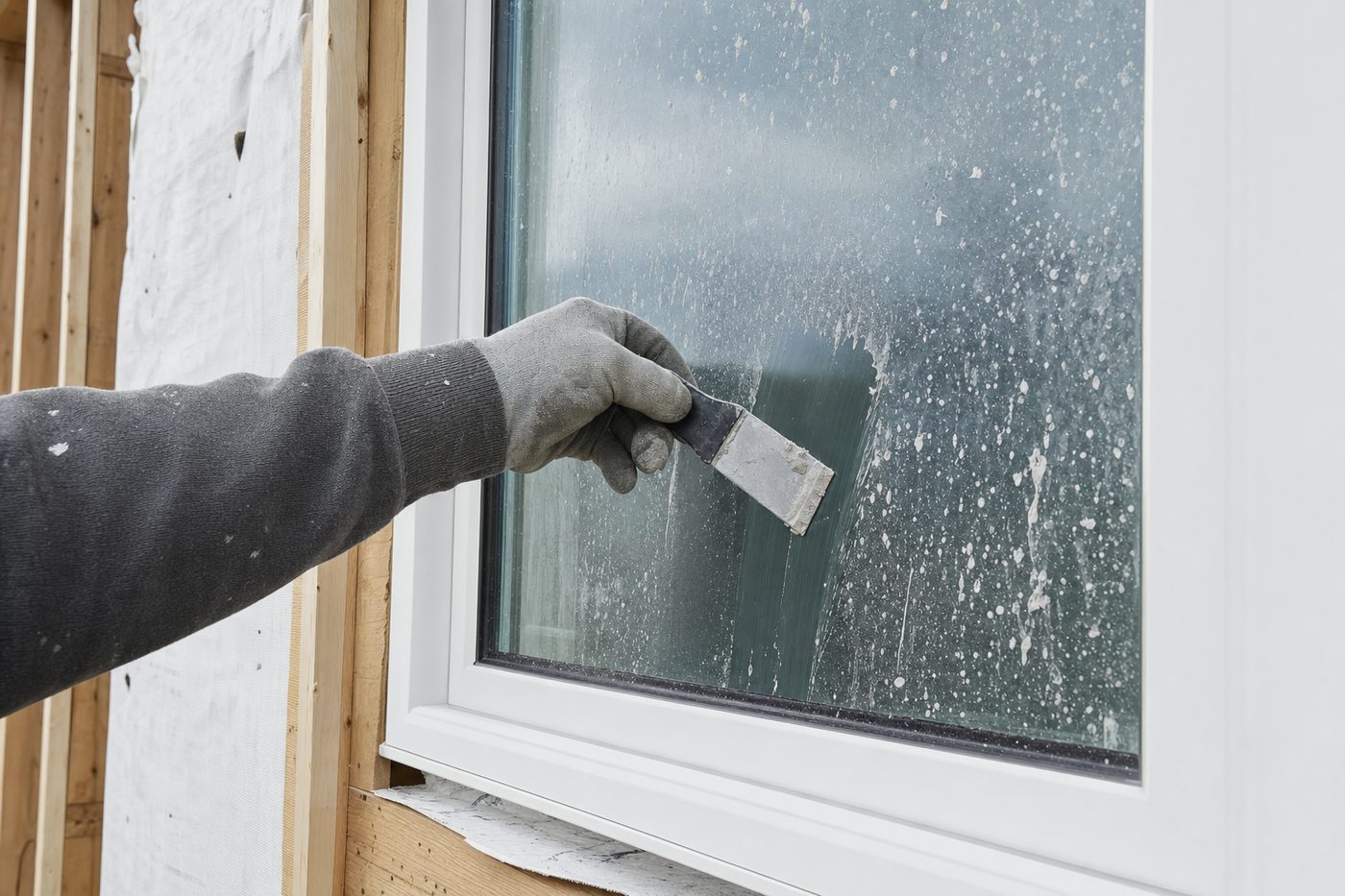
Paint, mortar, adhesive and stucco cut off the glass with steel wool and a razor. Not a wash. A glass scratch liability waiver is signed before any blade touches a pane.
At Joslin & Co, we do post construction window cleaning for builders, general contractors, renovators and homeowners in Keene, New Hampshire. This is the job where paint, mortar, adhesive, silicone and stucco have to come off the glass after the trades are finished. It is abrasive removal work rather than window cleaning, and it is priced and handled differently.
The distinction that matters is between dirt and contamination. Dirt sits on glass and washes off. Cured paint, set mortar and hardened adhesive are bonded to it, and only abrasive removal takes them off. That method is effective and it carries a real risk, which is why this job is worth understanding before you book it.
Why a normal clean will not do it
Soap and a squeegee will not touch construction residue
Every builder has watched somebody try. A bucket, a squeegee and a lot of optimism, and at the end of it the glass looks exactly the same because none of what is on it was ever going to wash off.
| What is on the glass | Why washing fails |
|---|---|
| Paint overspray | Cured film bonded to the surface, not dirt sitting on it |
| Mortar and concrete splatter | Cementitious, and it etches the longer it sits |
| Adhesive and label residue | Needs solvent and a blade, not detergent |
| Silicone and caulk smears | Smears further under a cloth |
| Stucco and plaster | Hardens into a mechanical bond with the glass |
Delay makes it worse in a specific way rather than a general one. Cement-based splatter etches the glass beneath it over time, so what would have been removal becomes removal plus permanent marking. Booking it as the trades finish is the cheapest decision available.
How it is actually done
Steel wool and a razor, in that order, with the glass kept wet
The sequence is steel wool first, with the glass kept wet throughout, which removes most of the material and lets you feel what the surface is doing. Then a razor for the remainder: shallow angle, wet, single direction. The two reliable ways to wreck a pane are scraping it dry and working it back and forth.
The work is slow and it is deliberate. There is no way to rush a blade across glass safely, which is why post construction pricing has almost nothing to do with how many windows there are and almost everything to do with what is on them and how long it has been there.
The part almost nobody explains
Fabricating debris, and why the scratch argument happens at all
There is a technical problem sitting underneath every scratch dispute in this trade, and it is worth understanding before you hire anyone, because most quotes will never mention it.
During manufacture, tempered glass passes through a furnace on rollers. Particles of glass can fuse to the surface in that process and stay there. They are a manufacturing defect and they are present before anybody cleans anything. Drag a blade over a pane carrying fabricating debris and those particles dislodge and travel under the edge, cutting the surface as they go.
The detection is tactile rather than visual. A pane with fabricating debris feels and sounds gritty under the blade, and that is the signal to stop and reassess rather than push on. The reason this argument recurs across the trade is that glass carrying these fines still passes industry standards, because the particles do not affect clarity or strength. So the pane is not defective by the standard, and the scratch is real, and the two facts sit there contradicting each other.
Understanding it is what turns the risk into something manageable. You test before committing, you stop the moment the feel changes, and you agree who carries the risk up front instead of arguing about it later. That agreement is the waiver.
How we handle the risk
We use a glass scratch liability waiver, and we would rather explain it than bury it
A glass scratch liability waiver sounds like a company protecting itself, and it partly is. It is also the only honest way to handle a risk that exists in the glass before anybody arrives.
| What the waiver does | What it does not do |
|---|---|
| Puts the fabricating debris risk in writing before work starts | Excuse careless work or poor technique |
| Records that scraping is the only method that removes the residue | Remove our general liability cover for damage we cause |
| Makes the decision yours, with the risk stated | Get signed after the fact |
Signing one before significant scraping is ordinary practice in this line of work. What matters is when it happens. Ours is discussed and signed up front. A waiver that appears after the damage is worth nothing to either side.
Who this is for
Builders, contractors, renovators and homeowners at handover
| If you are | What usually matters most |
|---|---|
| A general contractor | Getting the glass signed off at handover without a callback |
| A window or glazing installer | That somebody understands fabricating debris before a blade is used |
| A renovator | Old glass and new residue on the same job |
| A homeowner after a build | That the windows you paid for actually look new |
The opening conversation is identical in every case: what is on the panes, how long it has been sitting, and whether the glass is tempered. Those three answers shape everything that follows.
Where this work comes from in Keene
Renovation produces the same glass as new build
Not much gets built new here. Only 10.1% of the housing has gone up since 2000, while 34.3% predates 1940. What that means is that this work arrives through renovation rather than new construction, and a gut renovation leaves glass in exactly the same state a new build does.
Either way the useful thing on the first call is not the window count. It is what is on the glass, roughly how long it has been sitting there, and whether the units are tempered. Residue that has had a summer to cure is a different job from residue a week old.
Before you hire anyone
Ask for both policies by name, not just “are you insured”
“Insured” matters more on this job than on any other kind of window cleaning, because this is the job where glass actually gets damaged.
General liability pays for damage to your property. Workers’ compensation pays for the person doing the work if they are hurt while they are there. Two separate policies, and a company can carry one without the other.
Abrasive removal is deliberate contact between a blade and a pane. That is precisely the situation general liability exists for, and it is why the cheapest quote on a post construction job is rarely the cheapest outcome. workers’ compensation matters for the same reason it always does: somebody is on a ladder on your site.
We carry both. $1,000,000 in general liability and workers’ compensation, and a certificate of insurance is available on request. Ask us for it, and ask everyone else for it too.
Nico Joslin has cleaned windows for ten years and started Joslin & Co in March 2024. It is family-owned and owner-operated, and it runs out of 61 Appleton Rd Unit 8, New Ipswich, NH 03071, which is a real address with a real phone behind it.
Questions
Common questions about post construction window cleaning in Keene
What does post construction window cleaning cost?
There is no honest starting figure for this one. What decides it is the type of residue and how long it has been curing, not the window count, and those two things vary enormously between jobs. Ring us with the details and we will tell you what it involves.
Can you not just wash it off?
No. Construction residue is bonded to the surface rather than sitting on it. Paint has cured into a film, mortar has gone off, adhesive needs solvent. Detergent and a squeegee move dirt, and none of this is dirt.
Will scraping scratch my windows?
Not on sound glass handled properly. What creates the risk is fabricating debris, particles fused into tempered glass during manufacturing, already there before any cleaning happens. Under a blade they can lift and cut across the surface. Detection is tactile, the defect is a manufacturing one rather than cleaner error, and managing it is the purpose of a glass scratch liability waiver.
What is a glass scratch liability waiver?
A document signed before work starts that sets out the fabricating debris risk in writing, records that scraping is the only method that removes the residue, and leaves the decision with you. It is normal practice in this trade on any job involving significant scraping. It does not excuse careless work.
Why would glass with a defect still be sold?
Because fabricating debris does not affect how clear the glass is or how strong it is, so a pane carrying it still meets industry standards. That is exactly why the argument keeps happening: the glass is not defective by the standard, and the scratch is still real.
How do you know if glass has fabricating debris?
By feel and sound under the blade rather than by looking at it. A pane carrying it goes gritty, and that is the point to stop and reassess instead of pushing through. It is a large part of what experience is worth on this job.
How soon after the build should it be done?
Sooner is better and it is not close. Residue keeps curing and mortar etches the longer it sits, so the same job gets harder and slower with time. Booking it as the trades finish rather than weeks later is the single biggest thing that affects what it takes.
Do you do this on new builds and renovations both?
Yes. A gut renovation leaves glass in the same state a new build does, and the removal is the same work either way.
Are you insured for this?
Yes. $1,000,000 in general liability plus workers’ compensation, with a certificate of insurance available on request. On abrasive work that is not a formality, it is the point.
Coverage
Keene and the wider service area
Joslin & Co works out of New Ipswich, New Hampshire, across southern New Hampshire and north-central Massachusetts. Peterborough, NH and Milford, NH are also in the service area, and the full list is on the service areas page. If your town is not on it, ask.
Residential window cleaning in Keene
Glass inside and out, screens and storm windows, from $250.
Commercial window cleaning in Keene
Storefront glass on a schedule, and buildings up to five stories.
Hard water stain removal in Keene
Mineral scale that a wash will not lift.
Post construction window cleaning
How the service works across the whole service area.
Get a price for your Keene project
Call and tell us what is on the glass, roughly how long it has been there, and whether the units are tempered. That is enough for us to tell you how it gets handled and what it takes.